
Bollinger Band Short
Avis Budget Group

Disclaimer : Neither stock nor trading advice, this is just to illustrate a concept
A month ago, we talked about mean reversion when a stock is overextended on the upside
Think of mean as the mid point,
Two standard deviations above the mid point is the upper bound, and two standard deviations below the mid point is the lower bound
Essentially, when price is above two standard deviations from the mean, it implies that the stock is highly overextended, and is more than likely to come back to its mean - if the fundamentals remain the same
Here is a real world example from the last ten days
Its a two month, daily chart (as in, each candlestick represents one day), between 3/11 and 4/29
This plot below does not have the Bollinger Band overlaid on top of it - so there is no way to make decisions based on this plot. You simply don’t know if it is over-extended or not in this plot
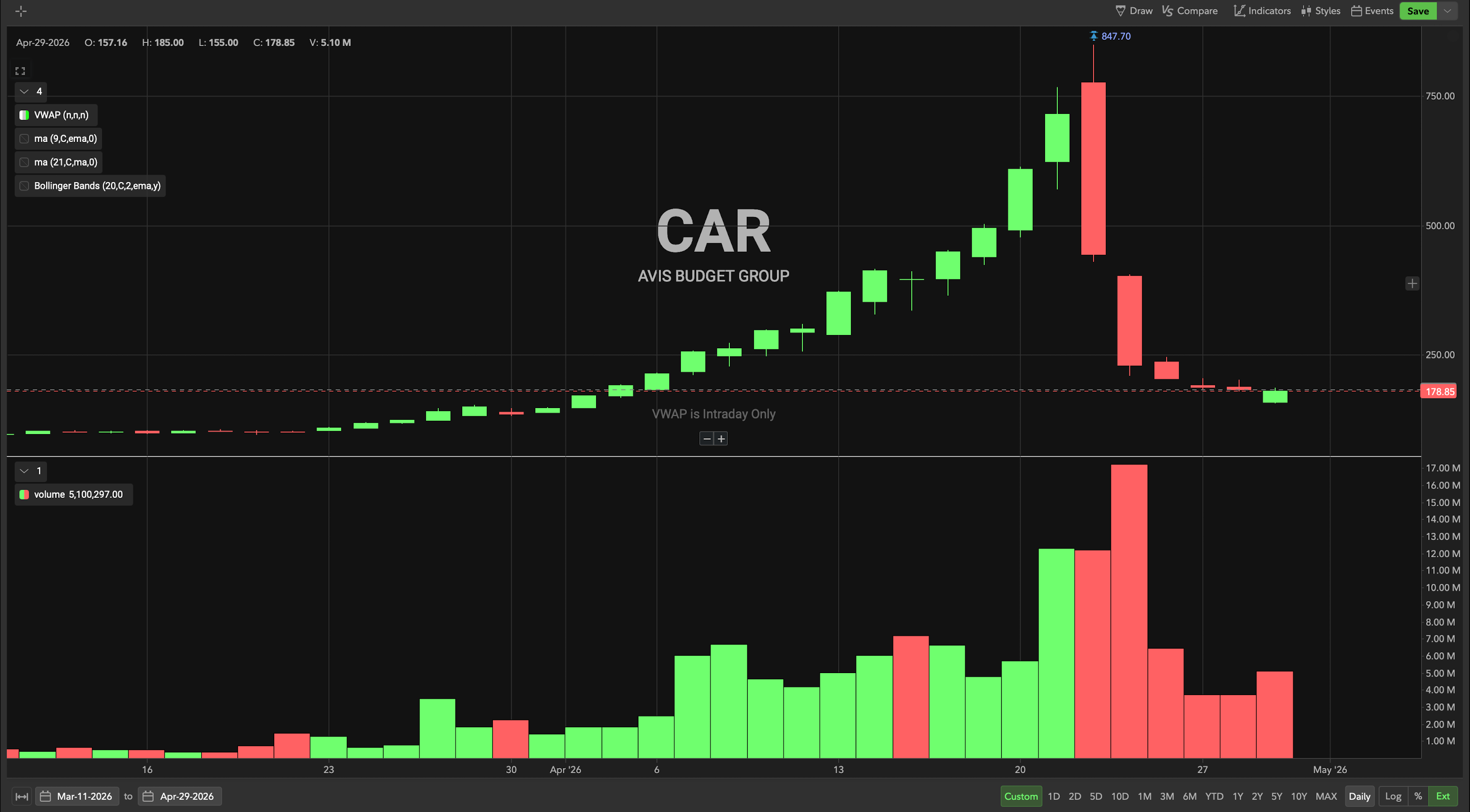
And to show how Bollinger Bands help you with your decision-making,
the plot below does have Bollinger Bands, and you can see how they help you make a trading decision
The mean is the thick blue line in the middle, and you can see the price spike above two standard deviations from the mean (above, the upper band) - it is a clear signal to short with a stop loss on the upside
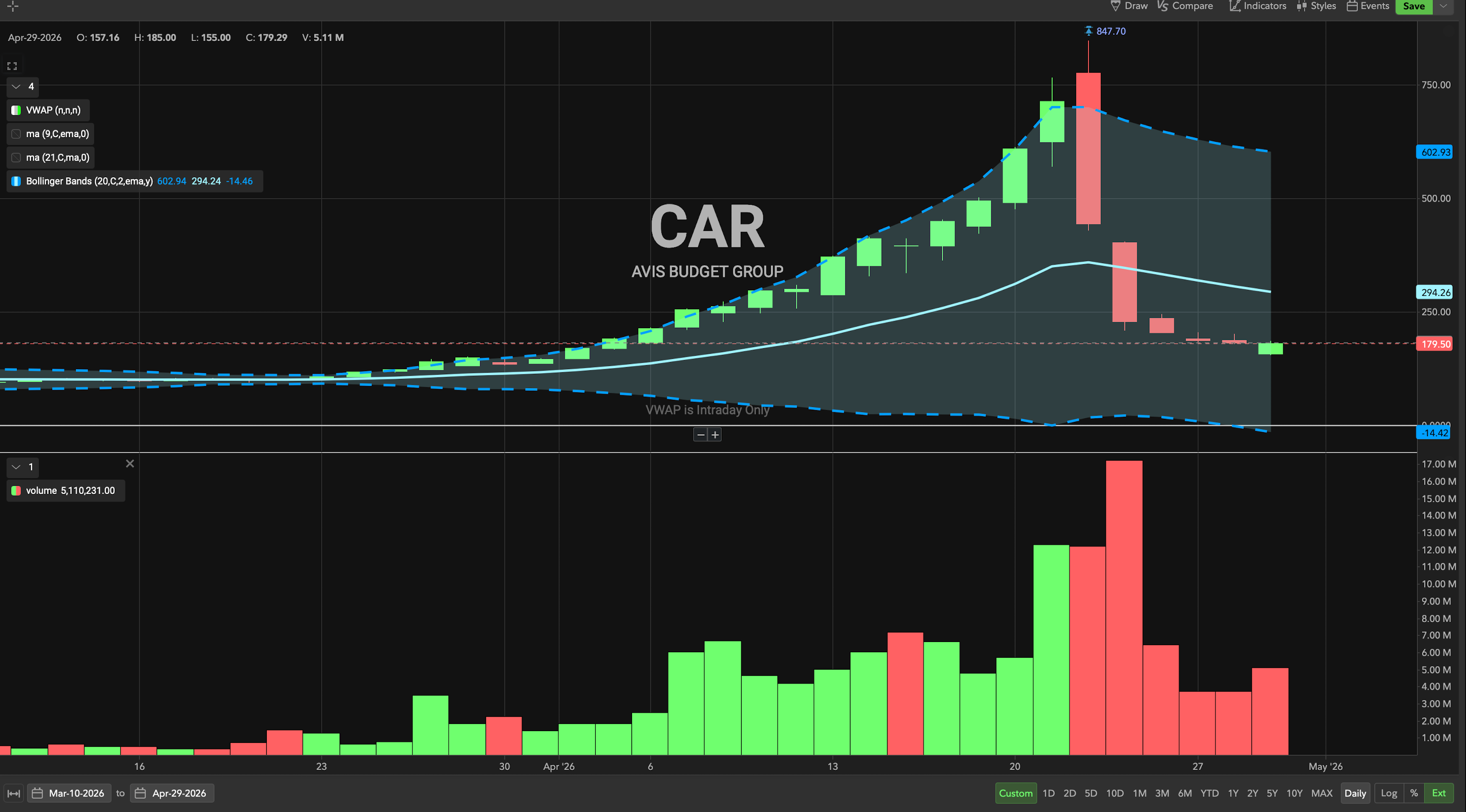
In about a week, it went from 850 to 180, that’s an 79% drop, and it also tells you the importance of risk management
If you don’t have a clear profit target then you definitely would have given all your gains back, and if you bought it when it was already over-extended (thinking it is simply going to spike to the moon) - then you definitely would have ended up in red
This is classic mean reversion where foundational stats help you make a great trading decision
Salud, Feliz Cinco de Mayo !
Here it is your moment of zen, do you have a drinking problem ?
— Deepak Sivaraman PhD (Axe), adeadcatbounce@gmail.com