
How Market Makers Think

Jane Street, Citadel, and Optiver - they are all market makers on the Street. When you buy a share of TSLA, you either buy it from other retail traders, or you buy from the market maker who provides liquidity to the market
When you sell a share of TSLA, your counter-party on the other side of the trade is most likely a market maker too. You just don’t think about them because you never see them, its not a person, it is most likely a Wall Street firm
Market makers, well … they make markets
They do both - they buy and sell shares. They quote both their bid (buy) price and ask (sell) price
Typically, as an example, they quote 100 (buy price) and 100.05 (sell price)
If yours is a market order (filled at the best price someone is willing to sell at), then you buy at 100.05 by paying 100.05 to the market maker
The market maker is now one short of that share, he or she sold to you. So, they’ll simply buy it back from the market. They already quoted 100 as their own buy price, and traders will sell a share to them at 100
After this, the market maker is neither long or short, they are flat, and their PnL is +100.05 - 100 = +0.05 (it could be lower, but five cents is the max)
They simply make this five cent profit, by making the market that we trade on
Their only risk is the risk of holding inventory
If they sell two shares of TSLA to you, then they are two short. If TSLA suddenly spikes, then they would have to buy two shares at a higher price than what they sold to you, to close out their short - and that leads to a loss
So, their risk is the time component of holding inventory under a dynamic price. They strive to be as flat as possible at all times, neither too long nor too short. Casinos operate the same way too, they want approximately equal action on both sides of the game, and their profits aren’t necessarily tied to the outcome of the game
They get a cut from each bet placed on either the Seahawks or the Rams, regardless of who wins the game. Market makers don’t profit off the direction of the stock, they simply profit by making a market place where you can buy and sell shares
I have long waited to write this, but deep inside, I kept thinking about, how the fuck am I gonna explain market making to my audience ?
Well … today is a Sunday. I have only one thing penciled in for eight hours, and it is indeed the NFL red zone. It’s dangerously unhealthy, I can just sit on my recliner La-Z-Boy and do this for hours on end, without as much as a tinge of guilt. I feel like someone pours valium on my brain when I do this each Sunday
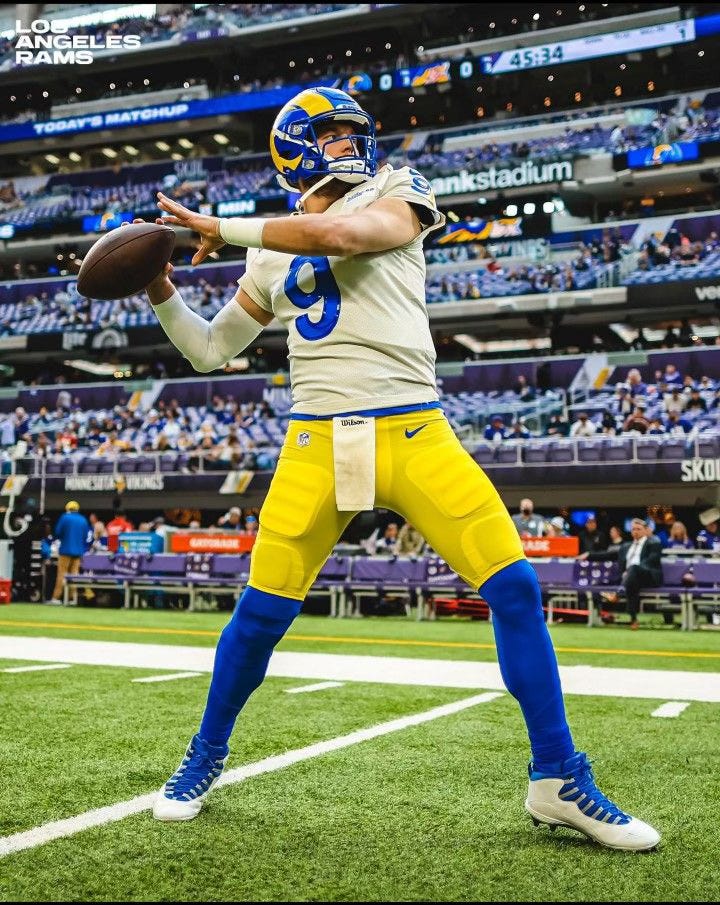
You cannot pay me enough to watch the Bears, Jets, Giants or Panthers - I don’t want to watch measured drives that move the sticks, two yard runs, and 14 play drives loaded with check downs
Fuck that !
One more time, Fuck - That !
Nonchalantly roll out the pocket and extend the play until someone gets open - and gun it to him, even better ? as you roll out the pocket, re-route your receiver post-snap, and then, gun it to him
I kneel to the Church of Burrow and Rodgers
… no look pass, shovel pass, side arm swipe pass
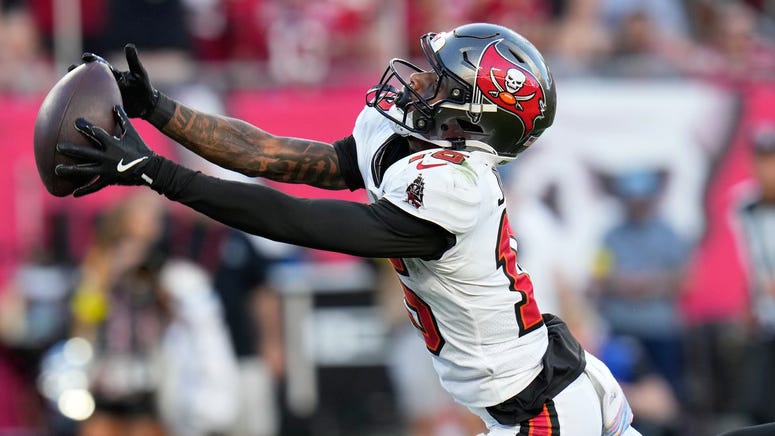
up the gut, over-the-top pass that lands on the receiver’s hands as he is turned backside to the ball, running full-speed into the end zone, both arms stretched out like he is prayin’ to the good lord himself, the ball finds the receiver more than he finds the ball … that’s what great quarterbacks do
That’s what Baker Mayfield does, and that’s what Matthew Stafford does
When this happens, the pleasure centers in my brain light up like a Christmas tree
NFL it is indeed, to explain how the best firms on the street make markets
So,
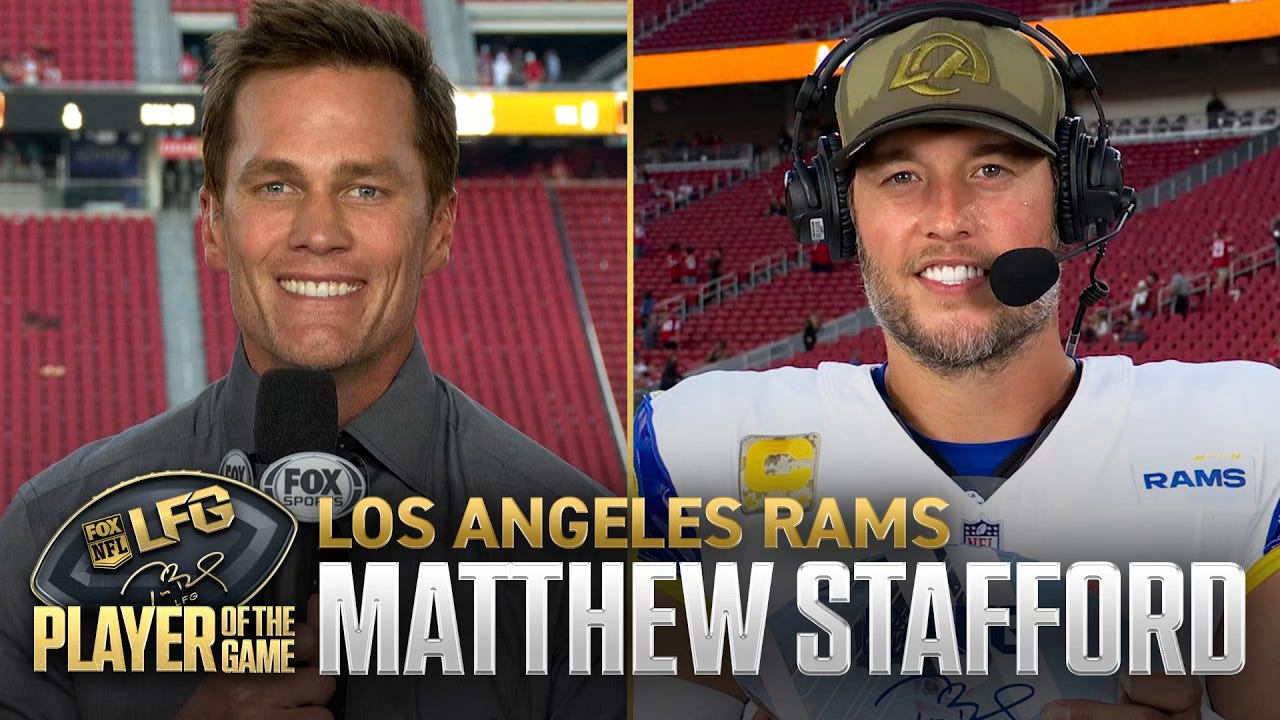
I’m the market maker, and Stafford generally throws between three and four TDs each game
I am going to make an initial market that you all can trade on
I’m going to say, the number of touchdowns Stafford will have this evening, is 2.5 at 3.5 (we call this the bid ask spread)
This means, you can sell to me at $ 2.5, or buy from me at $ 3.5. We’ll settle this contract at the end of the game, the final value of the underlying asset is $ 1 for every touchdown that Stafford throws this evening
I just made a market for y’all to trade on
Say, you sell to me at $ 2.5. I’m long a share and I paid $ 2.5 for that share, and you are short a share
At the end of this game, both of us need to close out our positions (as in, we can neither be long nor short)
If Stafford finishes the game with 5 TDs, then we can consider that to be the underlying value of the asset we traded ($ 5)
What I bought for $ 2.5, is now worth $ 5, so I close out my position - I sell, with a gain of $ 2.5. I’m flat (neither long nor short)
You already sold the share to me at $ 2.5, you need to close out by buying it at $ 5. So you close out with a loss of - $ 2.5. You are flat
That makes sense, right ?
Au Contraire, if you buy from me at $ 3.5
You are long a share. You can close out by locking in a profit of $ 1.5
I on the other hand already sold to you at $ 3.5. I’m short and I need to close out my position. So, I buy at $ 5, and I close out with a loss of - $ 1.5
You can see how crucial the bid ask spread I made is - if I don’t get this right, I’m going to get picked off by the market. I want traders to buy from me AND sell to me, I neither want to be too long nor too short
Say, if I made the market to be : 1 at 2, most people will only buy from me at 2, because they expect Stafford to score more than two touchdowns. In that case, am too short, and if Stafford does score five touchdowns, I need to close out my position at a significant loss
If I sold 100 shares to you all, at two bucks a pop, I need to buy back each share at a loss of $ 3 from the market, to close out
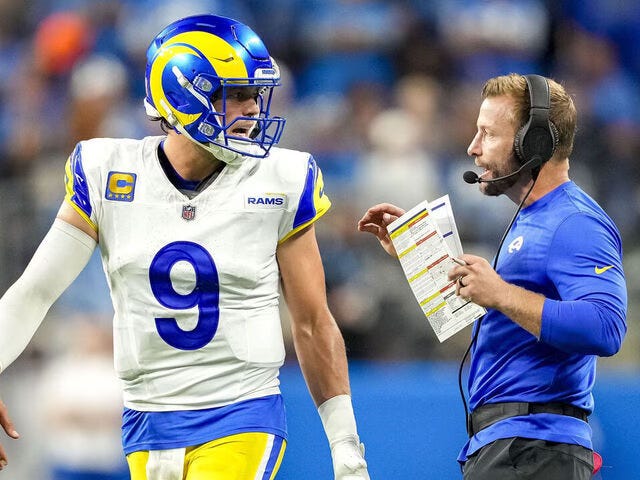
Say, I’m in that sweet spot : we’ll go back to our initial 2.5 at 3.5 (with a mid point of 3). Three touchdowns in an NFL game against a good defense is reasonable
Assume, Stafford in fact ends the game with three touchdowns
As the marker maker, if I actually get the spread right
Some people might have sold it to me at 2.5, in which case am long one share, and I close out by selling it at 3 (my gain +0.5)
And some people might have bought from me at 3.5, in which case am short one share, and I buy at $ 3 and close out (my gain is still +0.5)
So, if I get the spread right, I profit regardless of whether I buy or sell, as long as the proportion of people buying from me, and selling to me is approximately the same
My risk isn’t based on whether Stafford plays well or not, it is purely based on him staying within my market (2.5 and 3.5), which means it is crucial that I need to make an accurate market. If I make an accurate market, I get to gain on both sides, because people will trade both sides
This is honestly what fantasy football should evolve to - someone in your group should take this concept and make a market for a game each week, and you all should trade on it
This is the underlying intuition behind making markets and this is how the best firms on the street make a profit - both, when you buy from them, and when you sell to them
Dixie Left Closer, 14-Wanda, X-Now, F-Fade !
I live for the NFL season … inject that shit straight into my veins